
Rava Dhokla Recipe: Soft Semolina Snack at Home
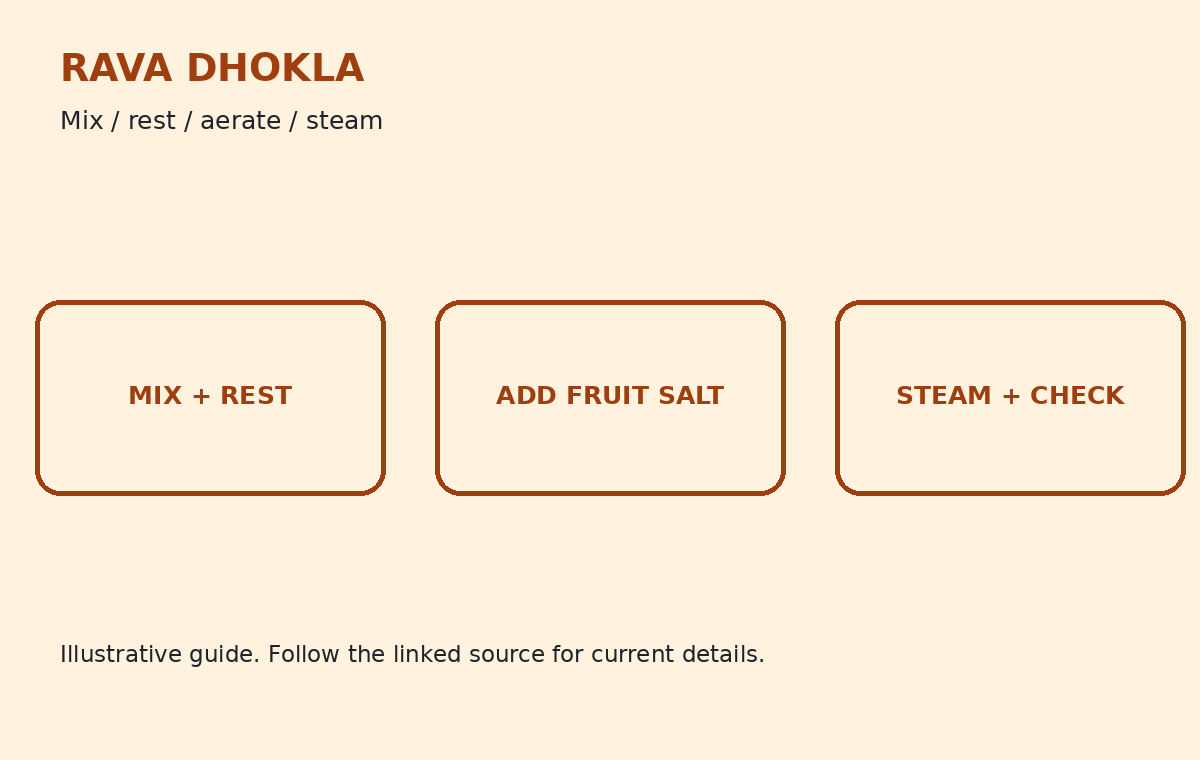
Rava dhokla is a steamed semolina snack that does not need a fermented batter. This researched guide follows the ingredient proportions and basic method in Tarla Dalal's recipe, explained in fresh words rather than presented as our own kitchen test.
What should you measure before starting?
For the batter, prepare 1½ cups semolina, ½ cup curd, 1½ teaspoons green-chili paste, about 1 cup water, 1 tablespoon oil and salt to taste. Keep 1½ teaspoons fruit salt separate until the steamer is ready. The source notes that the water needed varies with the semolina.
How do you rest and aerate the batter?
Whisk semolina, curd, chili paste, water, oil and salt into a smooth batter and rest covered for 30 minutes. Bring the steamer water to a boil and grease a 7-inch plate. Only then add fruit salt and 2 teaspoons water. Fold gently and transfer the batter promptly to the plate; do not leave it waiting after aeration.
How do you know when it is steamed?
The source starts with about 12 minutes of steaming. Check with a clean knife or toothpick; it should come out clean. If batter clings, continue for a few minutes and check again. Use care around hot steam and support the plate safely when lifting it.
What tempering and serving finish work?
The source uses a further tablespoon of oil with mustard seeds, sesame seeds and a little hing for tempering. Spoon the tempering over the steamed dhokla, let it settle enough to handle, then cut into pieces. Serve with a chutney you like. This guide makes no nutrition, shelf-life or guaranteed texture claim.
Frequently asked questions
Can I add fruit salt before the rest?
The source adds it just before steaming, not before the 30-minute rest.
Was this recipe personally tested here?
No. It is an attributed researched recipe guide.
Set up the work in the order you will need it
The important timing distinction in this researched recipe is the rest before aeration. Measure the batter ingredients and keep the fruit salt separate. During the 30-minute rest, prepare the greased plate and steamer so you do not need to search for equipment after adding the fruit salt.
- Mix and rest the batter as described above. The source says the water needed can vary with the semolina, so do not treat the approximate water quantity as a reason to ignore the batter's condition.
- Bring the steamer water to a boil and have the plate ready before aerating.
- Add the fruit salt with the specified water, fold gently and transfer promptly. Do not add the fruit salt at the start of the resting period.
- Use the source's steaming time as a starting point, then check the centre with a clean knife or toothpick. Batter clinging to it means the doneness check has not passed.
- Handle the plate and hot steam carefully before tempering and cutting.
Check the process before changing several ingredients
If the centre is still wet, first use the doneness test and continue steaming as needed rather than assuming the stated time guarantees a finished snack. If you are comparing your result with the source, note whether the batter was rested, when fruit salt was added and whether it waited before steaming. Changing several ingredients at once makes that comparison harder.
This guide has not been tested in our kitchen. These notes organise the attributed method, not a guarantee of fluffiness in every steamer. Ingredient substitutions may change the outcome; no dietary, allergen, storage-life or nutrition claim is made. Read ingredient labels for your own needs and use equipment safely.
Related guides
- Gujarati Handvo Recipe: Baked Rice and Lentil Cake
- Gujarati Khichu Recipe: Soft Rice Flour Papdi No Lot
- Tikha Gathiya Recipe: Crispy Gujarati Tea-Time Snack
Sources
Last verified: October 28, 2026.


Comments
Post a Comment